Patriz Concrete Project Guides
Concrete Patio Drainage: What to Observe Before Discussing Installation
Before discussing a concrete patio, observe where rainwater collects, which way it flows, and what nearby surfaces or structures may influence it. A few notes and photos can help you explain the site and ask focused questions. These observations do not replace an on-site assessment or determine the right drainage design.
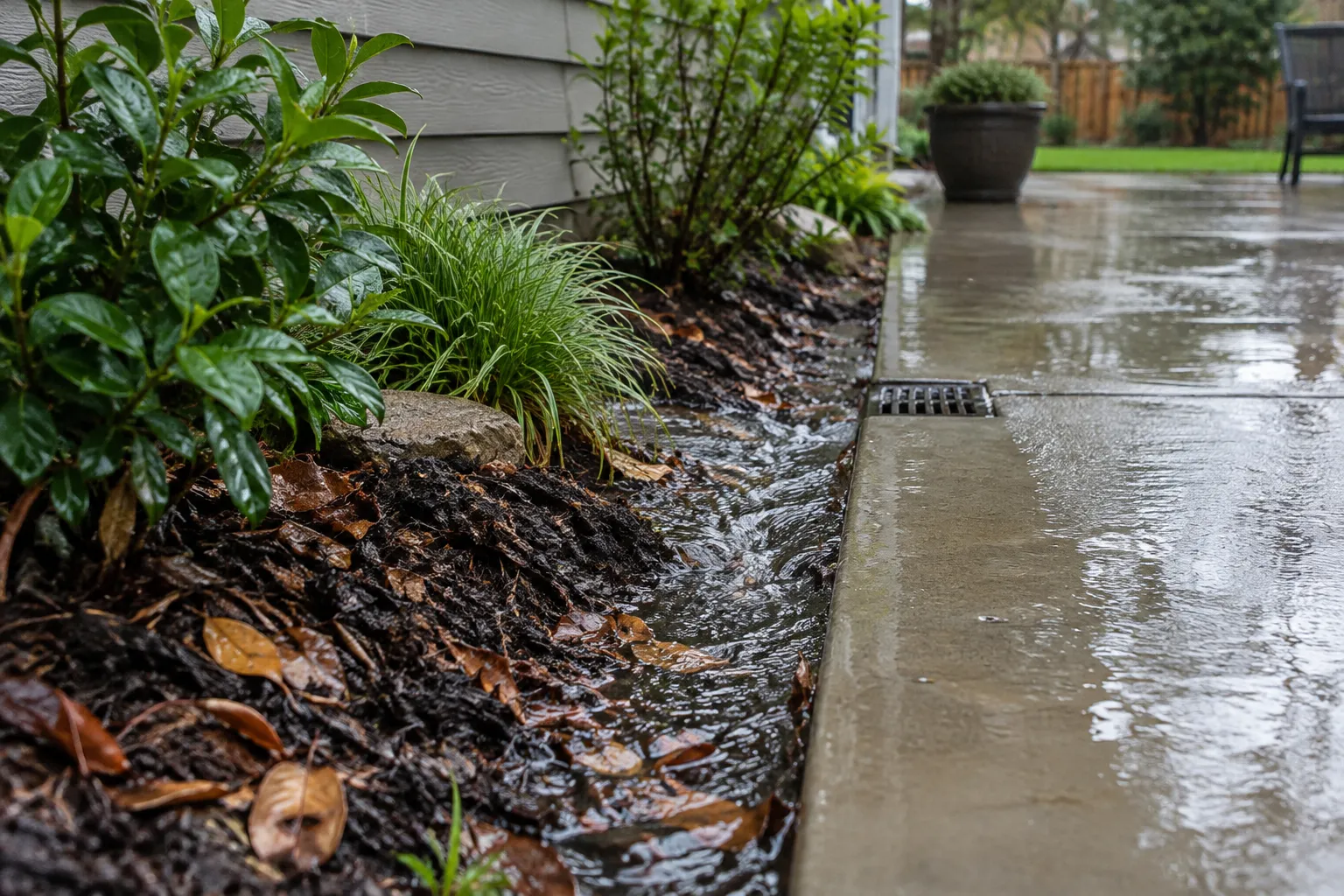
Before discussing concrete patio installation, observe what happens to water during and after rain: where it gathers, which direction it travels, and whether it approaches the house, a walkway, or another area. Note the conditions and share them with the contractor. These observations help frame the conversation, but they cannot establish the correct slope or drainage solution without assessing the site.
Watch the site during and after rain
If it is practical, look at the proposed patio area during rainfall and again after the rain stops. Notice whether water forms shallow puddles, follows a visible route, or leaves damp patches that remain after nearby areas have dried. Record roughly where you see each condition rather than trying to measure the slope yourself. A photo from a consistent viewpoint can make the location easier to explain later.
Pay attention to the edges of the proposed patio, not only its center. Water may arrive from a roof edge, lawn, existing concrete, or a higher part of the yard. It may also collect where surfaces meet or where soil appears compacted. These clues describe what you observed; they do not prove the cause. Rainfall intensity, soil conditions, grading, and nearby drainage features can all affect what happens.
- Note where water first appears and where it seems to go.
- Record whether puddles disappear quickly or remain after the rain.
- Photograph nearby downspouts, slopes, drains, and surface transitions.
Describe visible patterns without assuming their cause.
Notice what the patio would meet
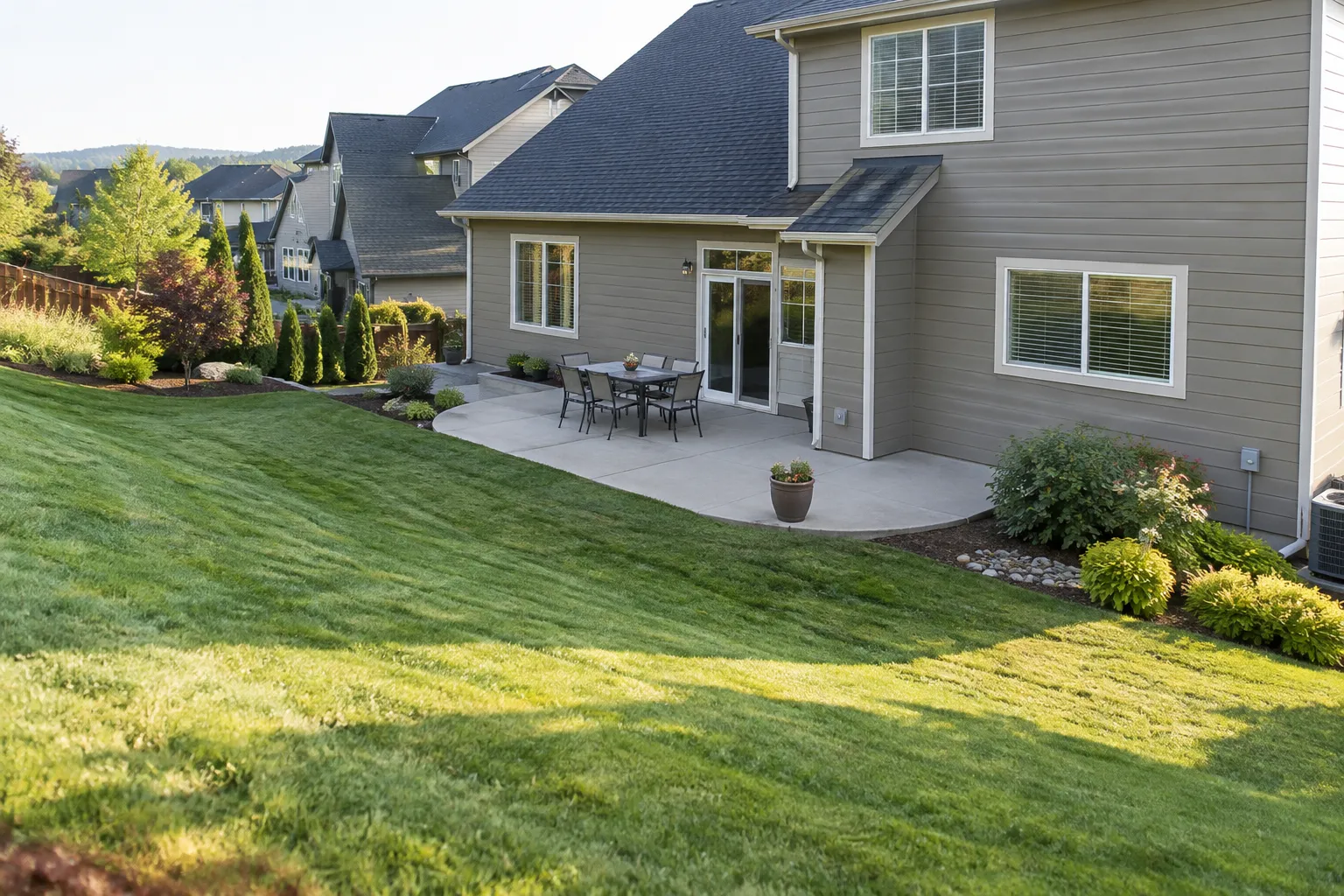
A patio is part of a larger outdoor area, so consider what surrounds the proposed footprint. Note its distance and relationship to the house, door thresholds, steps, walkways, garden beds, fences, and existing paved areas. Mention any visible low spots or places where soil or mulch has washed out. The aim is to give a clear picture of the setting, not to decide how water should be redirected.
Observe whether water appears to move toward a building, across a route people use, or toward a neighboring area. Water can cross property boundaries, so describe the direction you see and raise concerns for the contractor to assess. Do not assume that a particular drain, channel, or grading change is suitable. The appropriate approach depends on the actual layout and conditions, which need to be reviewed for the project.
- Identify nearby surfaces that may send water toward the patio area.
- Point out doors, steps, and walkways close to the proposed edge.
- Mention visible erosion, sediment, or repeated wet areas.
Share useful details, not a proposed fix
When you contact a concrete provider, explain the patio’s intended location and use, then describe the water pattern in plain language. For example, an illustrative homeowner might say, “After a heavy rain, water gathers near the back corner beside the existing walkway, then appears to move toward the garden.” This is a sample description, not a report of a real project. It gives the contractor a specific observation to discuss without prescribing a construction detail.
Include when you noticed the condition, whether it happens repeatedly, and whether the area has changed after landscaping or other work. Share clear photos taken from a few angles, including the surrounding ground and nearby structures. If you are still deciding on the patio’s size or shape, say so; the layout and drainage discussion may inform each other. For an overview of the company’s concrete offerings, see the concrete services page.
- Describe the proposed patio location and how you plan to use it.
- Summarize where water collects or travels, and when you observed it.
- Share photos that show both the area and its surroundings.
- Ask what additional site information is needed to discuss drainage.
Bring observations and questions, not a predetermined drainage design.
What an observation can—and cannot—tell you
A visible puddle is useful information, but it does not by itself show whether the patio needs a particular slope, drain, or other feature. Surface water can be influenced by the existing grade, soil, roof runoff, and adjacent paving. A contractor needs to consider the site and proposed layout before discussing options. If the water pattern is not visible during your first visit, say that; do not treat a dry day as proof that drainage is not a concern.
Likewise, a photo can show where water appears to collect but cannot reliably establish elevations or what lies below the surface. Avoid making construction decisions from a single image or trying to correct the grade before the project is assessed. Ask the provider to explain how the proposed patio layout relates to existing water flow and what site conditions could affect the plan. The company’s project gallery can help you see examples of concrete work, but images of other projects do not determine what your property needs.
| What you can report | What needs site review |
|---|---|
| Where water visibly gathers after rain | The cause of the pooling |
| Which direction runoff appears to travel | The appropriate grading or drainage approach |
| Nearby doors, paving, and low areas | How the final patio should meet those features |
Use observations to start a site-specific conversation, not to settle technical decisions.
Common questions
Should I wait for rain before contacting a contractor?
No. You can describe what you have noticed already and share photos if available. If you have not seen the area during rain, mention that limitation and ask whether a site visit can help assess the layout. A rainy-day observation may add useful context, but it is not a requirement for starting a conversation.
What if water seems to come from a neighboring area?
Describe the direction and location where you see water entering or crossing the proposed patio area. Avoid assuming who is responsible or choosing a fix based on appearance alone. The contractor can review how the patio relates to the surrounding site and discuss what further assessment may be needed.