Patriz Concrete Project Guides
What to Prepare Before Requesting a Concrete Driveway Replacement in Houston
Prepare a clear driveway replacement request by noting the property location, approximate dimensions, visible condition, access constraints, drainage concerns, and the outcome you want. Photos and focused questions can help a concrete provider understand the scope, while an on-site assessment may still be needed to confirm details.

Before requesting a concrete driveway replacement estimate in Houston, gather the property address, approximate driveway dimensions, clear photos, notes about visible damage and drainage, and details about access. Also describe how you use the driveway and what you want changed. This information helps start a more focused conversation, but it cannot confirm hidden conditions or replace an assessment of the site.
Describe the driveway and the outcome you want
Start with the property address or general location and a simple description of the driveway. Note whether it serves a single home, connects to a garage, or includes a wider parking area. If you know the approximate length and width, share them as estimates rather than treating them as construction measurements. A rough sketch can show the driveway shape, its connection to the street, and any side areas that might be included.
Then explain what prompted you to consider replacement. You might mention visible cracking, uneven areas, surface wear, or a layout that no longer suits how the household parks. Describe what you hope will be different, such as changing the outline or discussing a finish. Avoid diagnosing the cause of a problem from appearance alone; the underlying condition and suitable scope may require an in-person review.
- Approximate length and width, plus any irregular sections.
- Which areas you want considered and which should remain unchanged.
- How vehicles use the driveway and where they enter or turn.
- Your preferred general appearance or functional change, if known.
A useful request separates what you can observe from what you want the finished driveway to do.
Take photos that explain the site
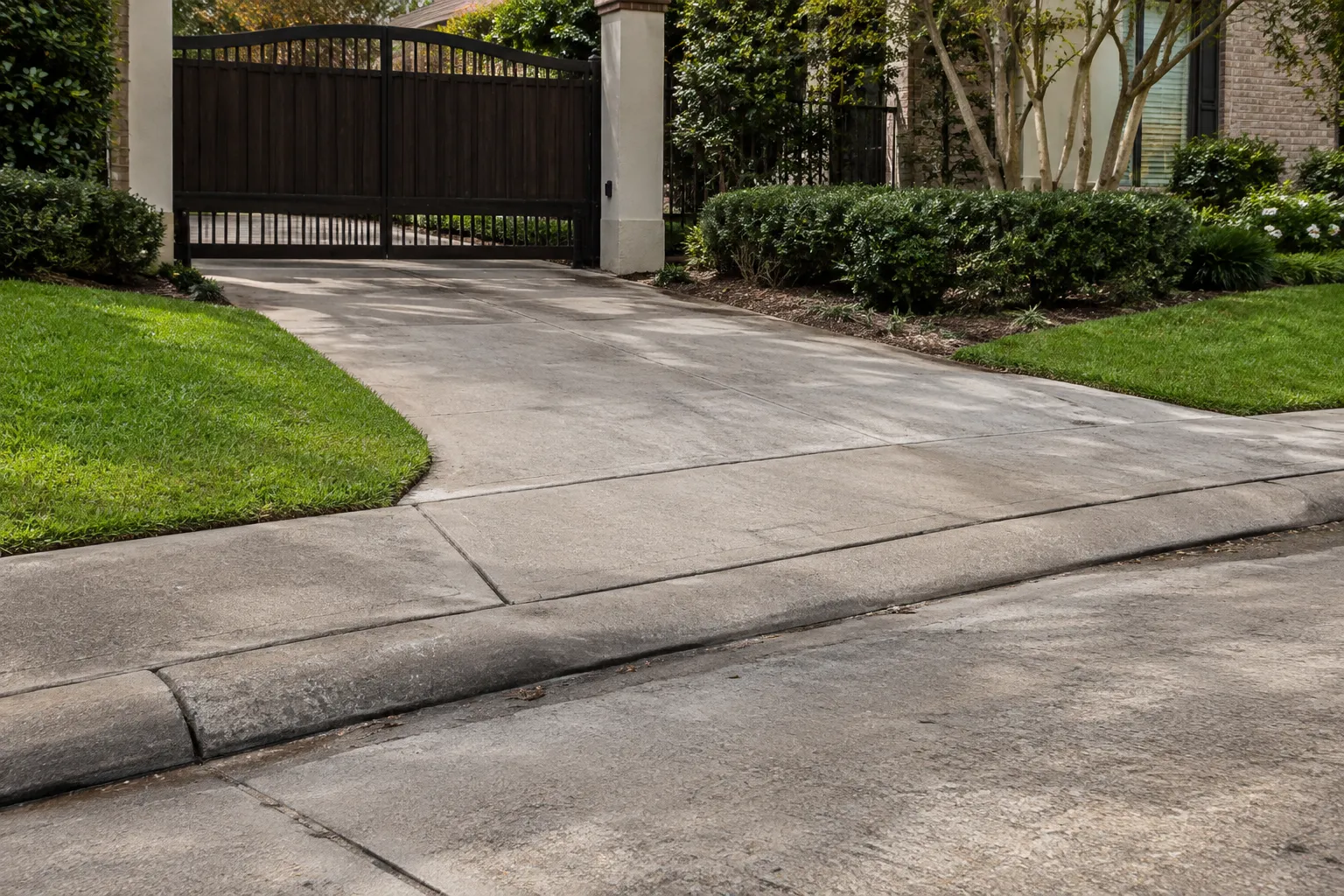
Take a few well-lit photos from different viewpoints: one showing the full driveway, others showing its connection to the street and garage, and close views of areas you want to discuss. Include nearby features that affect the work area, such as gates, steps, landscaping, or a narrow side passage. Keep the images current and make sure they show the actual property rather than a reference image of a style you like.
Add a short note to each photo if the location is not obvious. For example, label one “left side near garage” and another “street connection.” If a crack or low-looking area concerns you, describe what you have noticed without claiming to know why it happened. Photos help communicate visible conditions, but they do not show what lies below the surface or establish exact elevations.
- Photograph the full driveway from a position where its overall shape is visible.
- Capture the street entrance, garage connection, and any tight access route.
- Take close views of specific areas you want the provider to inspect.
- Add brief location notes and send the images with your initial request.
Flag drainage, access, and site constraints
Mention where rainwater appears to flow, collect, or cross the driveway, if you have observed this. Note nearby slopes, drains, or areas that seem to stay wet, but present these as observations rather than conclusions. Drainage, grade, preparation, reinforcement, finish, and intended use can all be relevant to planning a concrete scope; a provider may need to inspect the site to understand how these factors relate.
Describe practical access as well. Is there a gate, limited turning room, a long route from the street, or a section that vehicles must continue using? Mention anything that could affect when or how the area is available, including household parking needs. Do not assume a particular work method or schedule from a photo. Ask the provider what access and site preparation would be needed for the proposed scope.
- Where water seems to move or collect after rain.
- Nearby drains, slopes, landscaping, or other features to discuss.
- Gate width, turning space, and the route to the driveway.
- Parking or access needs that may affect planning.
- Any areas that should be excluded from the requested work.
Site observations help frame questions; they do not establish the cause of drainage or surface problems.
Ask for a clear scope and next steps
When you contact a provider, ask what information they need to assess the driveway and whether an on-site visit is appropriate. Request that the proposed scope distinguish the areas included, removal or preparation being considered, and the finish or other details under discussion. The right level of detail depends on the property and the work being proposed, so ask for clarification where the description is unclear.
You can also ask how access, drainage observations, and household parking will be considered in planning. If you are comparing proposals, compare what each one says is included rather than relying only on a short total description. Patriz Concrete and Remodeling lists concrete driveways among its services; you can review the concrete services offered and use your notes to start a project conversation. A site review may change what can be confirmed from the initial request.
- What parts of the driveway are included in the proposed scope?
- What site details need an in-person assessment?
- How will access and drainage observations be considered?
- What finish or layout choices should be decided before the work is described?
- What information will the written estimate clarify?
Common questions
Do I need exact measurements before I ask?
No. Approximate dimensions and a sketch can help explain the area, but label them as estimates. A provider may need to measure the site directly before confirming the scope. If the shape is irregular, note where it widens, narrows, or connects to another paved area. Avoid using a rough measurement as a final quantity or assuming it determines the work required.
Can photos confirm whether replacement is necessary?
Photos can show visible conditions and help identify what you want reviewed, but they cannot establish the condition below the surface or determine the cause of a crack or uneven area. Send clear images and describe what you have observed. Ask the provider what can be assessed from the images and what needs an on-site review before the scope is confirmed.