Patriz Concrete Project Guides
When Should You Ask About a Concrete Walkway Replacement?
A crack or worn patch does not automatically mean a concrete walkway needs replacement. Learn which visible changes to document, how to describe their pattern and effect on everyday use, and what to ask a concrete provider before discussing repair or replacement.
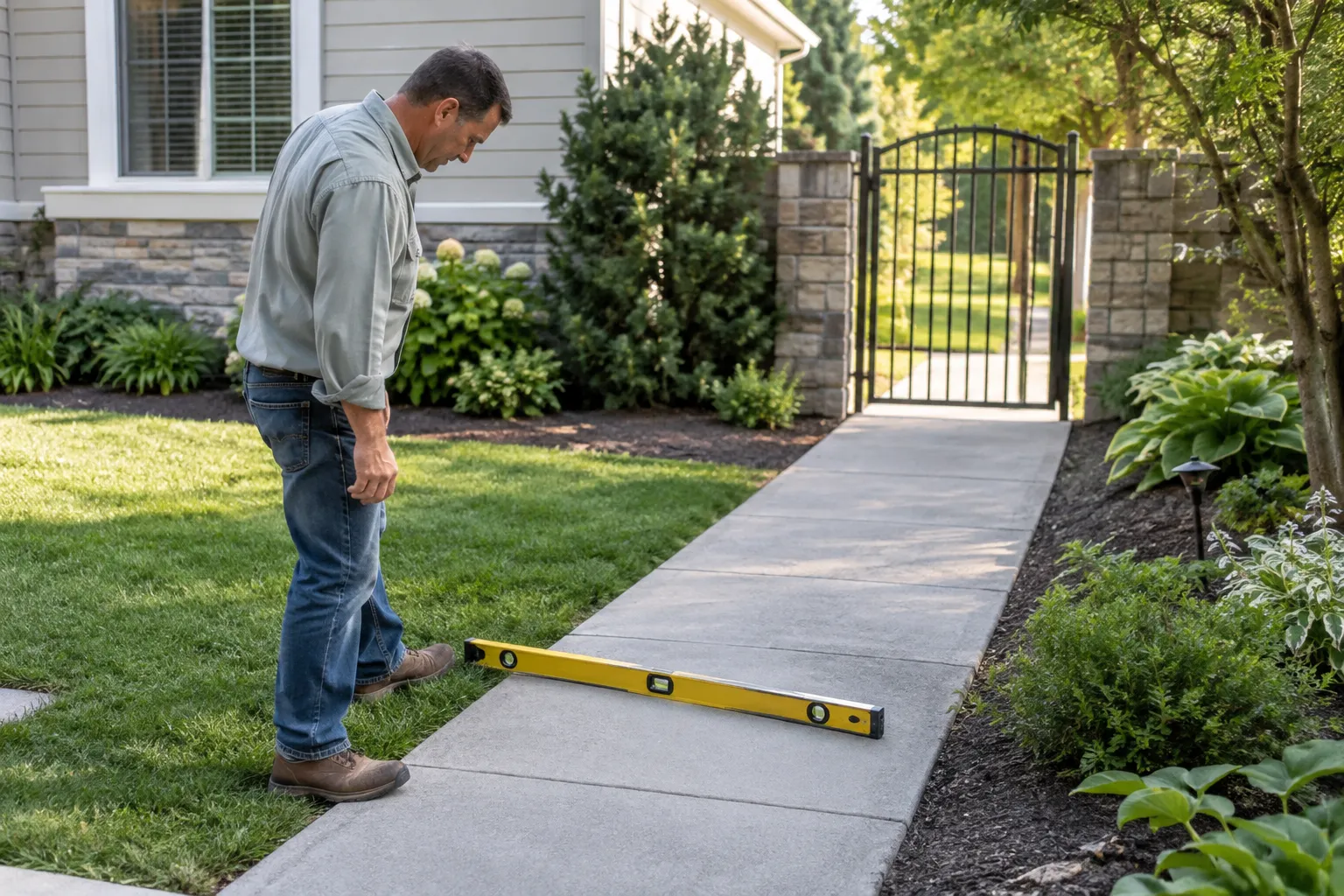
Ask a concrete provider about replacement when a walkway has recurring or spreading damage, separated sections, noticeable changes in level, or a layout that no longer works for the property. These signs do not prove replacement is necessary: cracks and surface wear can have different causes, and a visual description alone cannot establish what is happening below the surface. Note where the changes appear, whether they seem to be changing, and how they affect ordinary use. Then ask whether an on-site assessment should consider repair, resurfacing, or replacement. The right option depends on the walkway’s condition, site, and intended use.
Look for patterns, not one isolated mark
A single narrow crack is a reason to observe and describe the walkway, not a diagnosis. Concrete can crack for different reasons, and the significance depends on the type of structure and the nature of the cracking. A provider will need more context than the word “crack” to discuss possible next steps. Note whether the line is isolated or whether there are several cracks, whether sections appear separated, and whether the surface has chipped or broken away near an edge or joint.
Pay attention to change over time, but avoid treating a brief observation as proof of a cause. If you already have dated photos, they may help show whether a visible feature appears to have changed. Record the location in plain terms, such as “near the gate” or “beside the patio,” and describe what you can see without guessing why it happened. A photo with a familiar object nearby can help communicate scale, but it is not a measurement or an assessment.
- Describe the number and general location of cracks or damaged areas.
- Note whether a section looks separated, chipped, or different in level from the adjoining surface.
- Mention any visible change you have noticed over time, without assuming its cause.
A pattern and its history are more useful to discuss than an unsupported guess about the cause.
Consider how the walkway works day to day
If the concern is mainly appearance, say so. If the walkway is difficult to use because of a visible change in level or a damaged edge, describe the location and the effect in everyday terms. Avoid trying to lift, chip, or probe the concrete to find out what is underneath. A provider can explain what can be assessed from an inspection and whether additional information is needed.
Explain the visible condition and the everyday impact separately; neither one alone settles repair versus replacement.
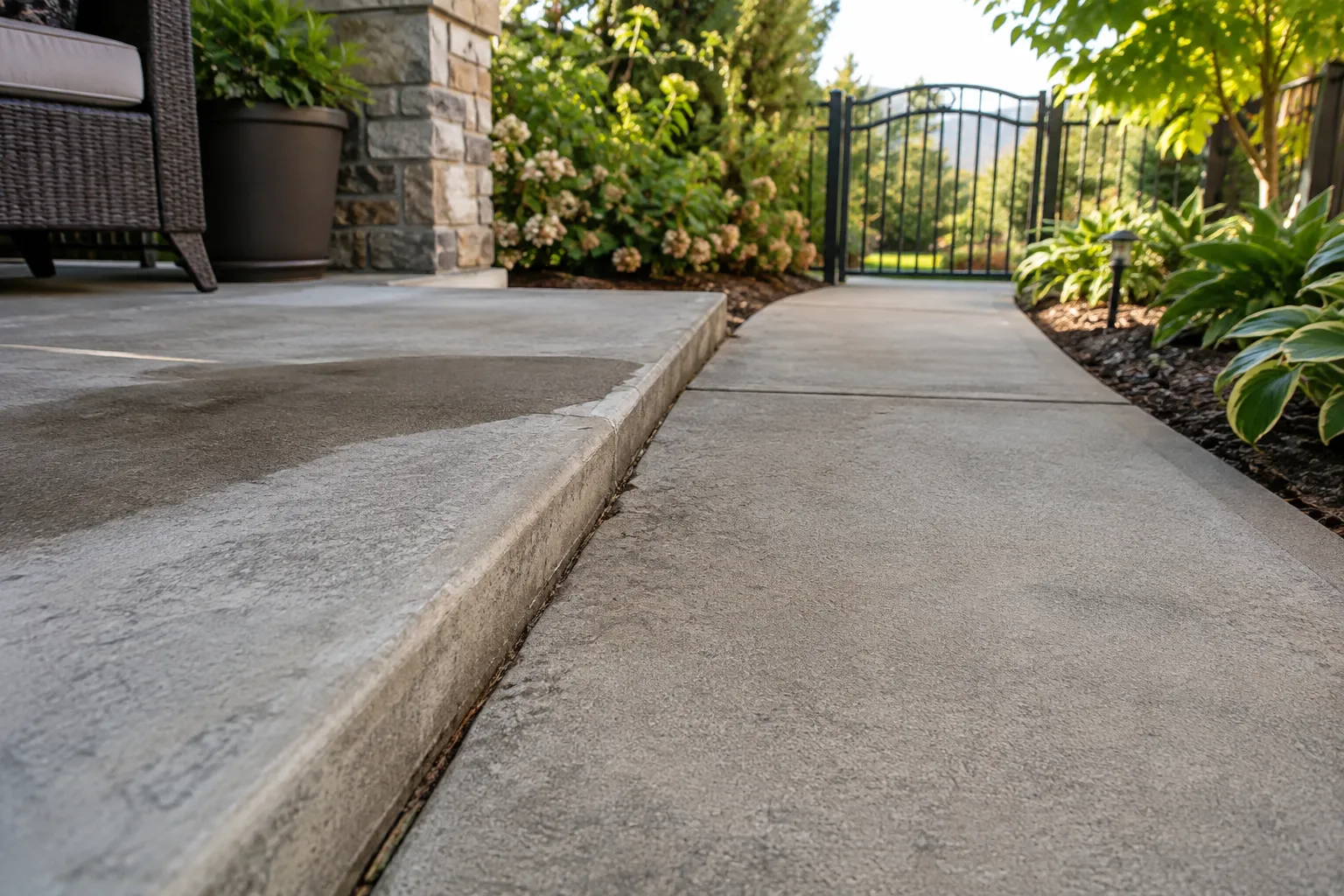
Compare the scope options before deciding
A replacement discussion does not mean you have already chosen demolition. Depending on the condition and the intended result, a provider may discuss repair, resurfacing, or replacement. Repair addresses a particular damaged area; resurfacing concerns the existing surface; replacement involves removing and installing concrete for the agreed scope. These are broad descriptions, not a recommendation for your walkway. The appropriate option depends on what an assessment finds and what outcome you want.
Ask what each proposed option would address and what it would leave unchanged. If a localized repair is suggested, ask how the surrounding concrete and visible damage affect that recommendation. If resurfacing is discussed, ask whether the existing surface is suitable for that approach. If replacement is proposed, clarify the area included, the intended route and finish, and how access, grade, drainage, preparation, reinforcement, and joints will be considered for the scope. The service overview describes these as planning considerations for accepted concrete work; the details for a particular property need to be discussed directly.
| Option to discuss | Useful question |
|---|---|
| Repair | Which visible area would the repair address, and what would remain? |
| Resurfacing | Is the existing surface suitable for this approach? |
| Replacement | What area and layout would the proposed scope include? |
Compare options by the condition each addresses and the result each is intended to provide.
Prepare a clear request for an assessment
Before contacting a provider, gather a short description rather than trying to write a technical diagnosis. Include the walkway’s location, the visible changes, when you first noticed them if known, and how the route is used. Add photos if they help show the overall path and the specific areas of concern. Mention any access constraints or nearby features that could affect the proposed layout, such as a gate, steps, planting bed, or connection to another concrete surface.
Ask what information the provider needs to evaluate the walkway and whether an on-site visit is appropriate. Request an explanation of the proposed scope, including what would be removed or retained, how the route and finish would be selected, and which site conditions need consideration. If you are comparing options, ask for each option’s limits as well as its intended benefit. A written description of the scope helps you understand what is being discussed; it does not replace an assessment of the actual site.
- Describe the location and the walkway’s everyday purpose.
- List visible cracks, chipped areas, separation, or apparent level changes without assigning a cause.
- Share relevant photos or observations about changes over time.
- Ask whether repair, resurfacing, or replacement should be considered and what further assessment is needed.
- Clarify the proposed area, layout, finish, and site considerations before comparing scopes.
A concise, observation-based request gives the provider a useful starting point without presuming the answer.
Common questions
Does a crack mean the walkway must be replaced?
No. A crack can have different causes and effects, and its appearance alone does not establish whether repair or replacement is appropriate. Describe its location, pattern, and any visible change, then ask a concrete provider what assessment is needed. The recommendation depends on the walkway’s condition, context, and intended use.
What should I send before asking about replacement?
Share the walkway’s location and purpose, the visible changes you have noticed, and how they affect ordinary use. Photos can help show the overall route and specific areas, especially if you can compare them with older images. Ask what else is needed to assess the site and compare possible scopes.